
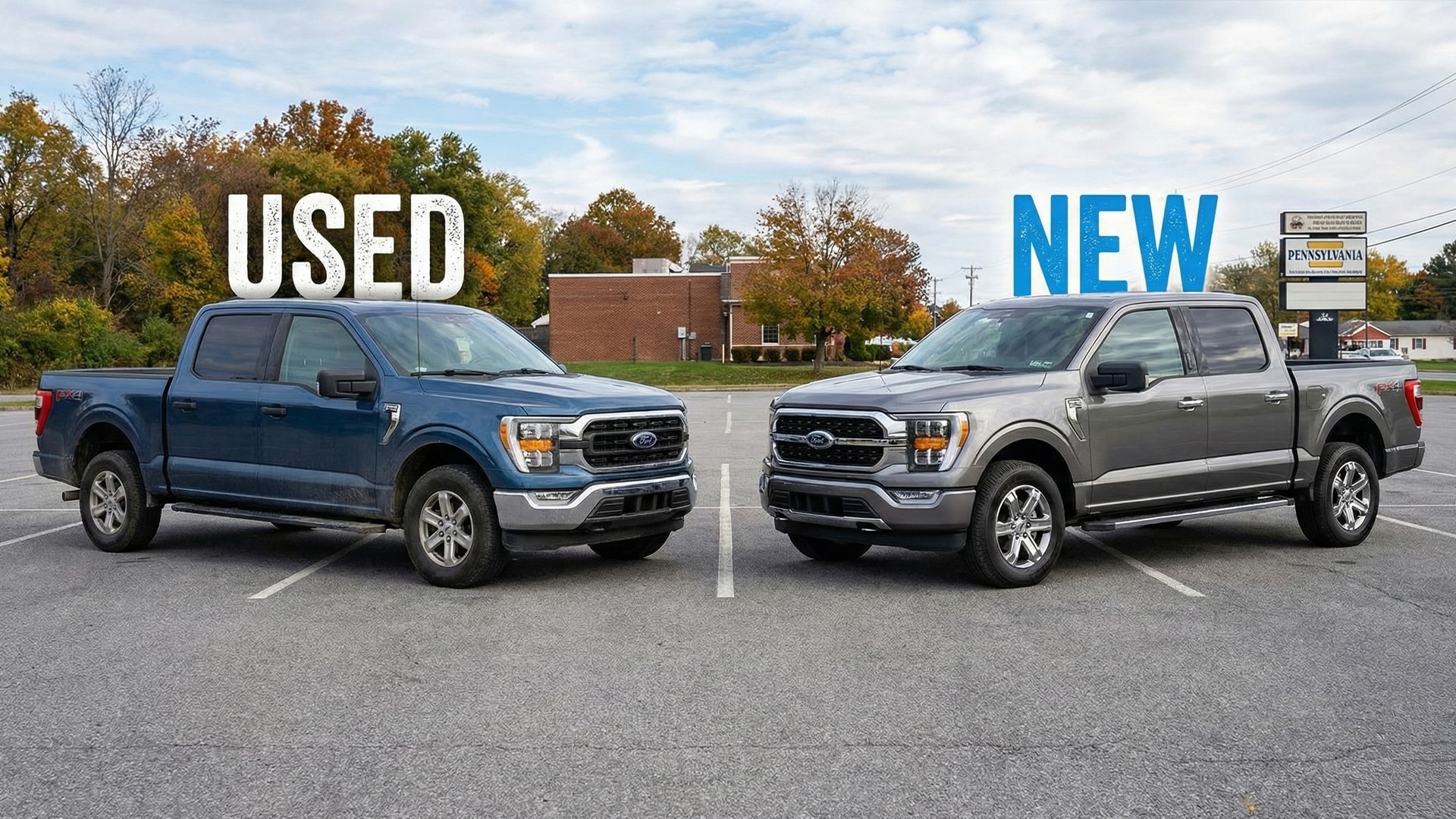
There is an undeniable allure to buying a brand-new vehicle. You get the "new car smell," the pride of knowing you’re the first person to sit in the driver’s seat, and the latest shine fresh off the assembly line. If you are a multi-millionaire, buying new makes sense—knock yourself out.
But for the rest of us, looking at the automotive market through a financial lens reveals a different reality. As a third-generation car dealer at Mark Martin Motors, I’ve seen the industry from the inside out.
Here is why you should almost always be buying used, specifically when it comes to pickup trucks, and how to maximize your value in today's market.
The Hidden Cost of "New"
One of the biggest reasons I advocate for the used market is the freedom from manufacturer errors. When you buy a brand-new vehicle, you are effectively a beta tester. Manufacturers often don't know about defects until thousands of units are on the road.
We see this constantly—for example, the thousands of F-150s with 2.7 EcoBoost engines that faced recalls due to manufacturing oversights. When you buy used (specifically vehicles with 10k–30k miles), you have the advantage of history. You can pull a Carfax, look at service records, and see if the vehicle has "weird issues" or if it’s a solid unit. You know exactly what you are getting.
The Depreciation Reality: Trucks vs. Luxury Sedans
Let’s talk dollars and cents. The used truck market is driven by supply and demand, and while prices may seem high, the depreciation factor on a used truck is significantly lower than a new one or a luxury sedan.
Consider this comparison from my lot:
-
Vehicle A: A 2021 Chevy Silverado 1500 LTZ with 87,000 miles.
-
Vehicle B: A 2023 Mercedes-Benz CLA 250 with only 7,000 miles.
Both of these vehicles originally sold for roughly the same price brand new (mid-$50k range). Today, I am selling them for roughly the same price. The Mercedes is practically brand new but has lost the same amount of value as a truck with 87,000 miles that was driven hard.
The Lesson: Pickup trucks hold their value. When you buy a used truck with the right equipment (GMC, Ford, Chevy, Ram, or Toyota), you take the smallest financial hit when you eventually trade it in.
Escaping the "Crowded" Market
A common mistake buyers make is sticking to a strict, lower budget where the competition is fiercest.
I often tell customers: "Get yourself out of where everybody else is buying."
If you have a $30,000 budget, you are likely looking at older trucks with higher miles. However, if you stretch to a $50,000 truck, the monthly payment might rise by a couple of hundred dollars, but the overall value proposition changes drastically:
-
Repair Costs: A newer truck has fewer immediate repair needs.
-
Interest Rates: Banks often offer better rates on newer vehicles.
-
Warranty: You likely still have factory warranty remaining.
When you factor in repairs and reliability, the slightly more expensive truck often costs you less over the life of the vehicle.
The Truth About Warranties and Technology
This might be controversial, but I would not buy a modern vehicle without a warranty.
Modern trucks are rolling computers. Between touchscreens, heated/cooled seats, and complex electronic systems, the risk of failure is high. A single headlight replacement on a modern Chevy can cost $2,500 because it requires dealership programming.
Manufacturer warranties are usually capped at 3 years/36,000 miles because they know that risk increases exponentially after that period.
How to Buy the Right Extended Warranty
Not all warranties are created equal. Many are scams with coverage caps of $5,000 or $10,000. You need an extended service contract (like Ally Premier Protection) that caps coverage at the book value of the vehicle. If your engine blows up, you need a warranty that covers the full $15,000 repair, not one that maxes out at $5,000.
When to Sell: The 100,000 Mile Rule
Finally, you need an exit strategy. The best time to trade in your truck is right before it hits 100,000 miles (around the 90k–95k mark).
Why? Financing. Most banks and credit unions tighten their lending criteria significantly once a vehicle crosses 100,000 miles. If you try to trade in a truck with 120,000 miles, the dealer knows it will be harder to sell because the average American buyer can’t get a loan for it. Trading it in before that milestone ensures you get the absolute most money back.
The Bottom Line
If you want to be smart with your money, skip the new car smell. Buy a lightly used pickup truck with the right equipment, secure a quality extended warranty, and trade it in before it hits 100k miles.
Watch the full explanation here: https://www.youtube.com/watch?v=oPbWZKr-9jU