
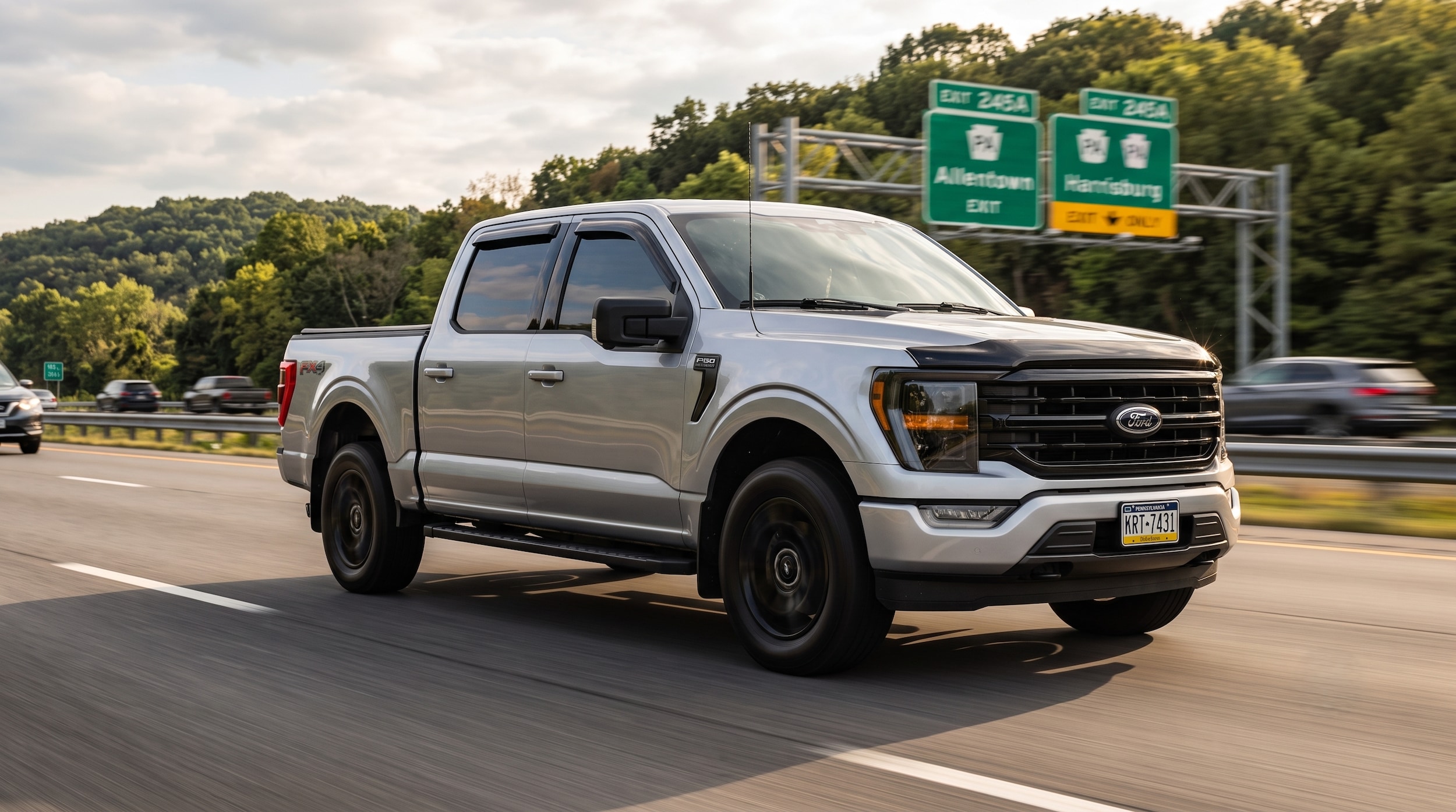
 The Truth About the Ford F-150 3.5 EcoBoost Engine
There is not a terrible engine in the current truck market, but buyers constantly wonder whether they should choose a traditional V8 or a twin-turbo setup. If you are shopping for a truck around Ephrata or taking a drive through Lancaster County, understanding how the 3.5 EcoBoost compares to the 5.0 V8 and the 2.7 EcoBoost will help you make the right choice for your daily driving and hauling needs.
Performance and Towing Capabilities
The 3.5 EcoBoost is the clear winner for torque and horsepower in the F-150 lineup. It produces 400 horsepower and 500 pound-feet of torque, while the 5.0 V8 makes 400 horsepower but falls short on torque at 410 pound-feet. More importantly, the EcoBoost hits its peak torque at just 3100 RPM, right off idle where you actually need it for pulling a trailer, compared to the V8 which needs to rev to 4250 RPM to reach peak torque. When it comes to maximum capacities, the 3.5 EcoBoost can tow up to 13,500 pounds, effortlessly beating the V8's limit of 12,900 pounds.
Reliability and The 2017 Engine Updates
You might have heard negative stories online about this engine, and early versions did earn a spotty reputation. Models from 2011 to 2016 suffered from carbon buildup on intake valves due to direct injection, along with cam phaser rattles, timing chain wear, and intercooler condensation. Ford solved the major complaints in 2017 by adding port injection to create a dual injection setup that washes the intake valves clean. They also revised the timing chain and improved cooling. A 2017 or newer 3.5 EcoBoost is built to easily surpass 200,000 miles with proper maintenance.
The Supercar Connection and Block Differences
It surprises many people to learn that the same engine block and heads used in your daily F-150 also power the half-million-dollar Ford GT supercar, where it is tuned to produce a massive 700 horsepower. Ford also trusts this engine in their premium heavyweights like the Raptor, Expedition, and Lincoln Navigator.
Some buyers worry because the 3.5 uses a traditional aluminum block whereas the smaller 2.7 EcoBoost gets a compacted graphite iron block just like a Super Duty truck. The 2.7 needs that tougher casting because it is a smaller shell producing massive boost. The 3.5 has more displacement and does not have to work nearly as hard to generate its power, making the aluminum block perfectly suited for the job. Normal driving with the 3.5 EcoBoost will even get slightly better fuel economy than a 5.0 V8, making it an incredibly well-rounded choice.
Watch the full breakdown here: https://www.youtube.com/watch?v=J6pmDm5slbU