
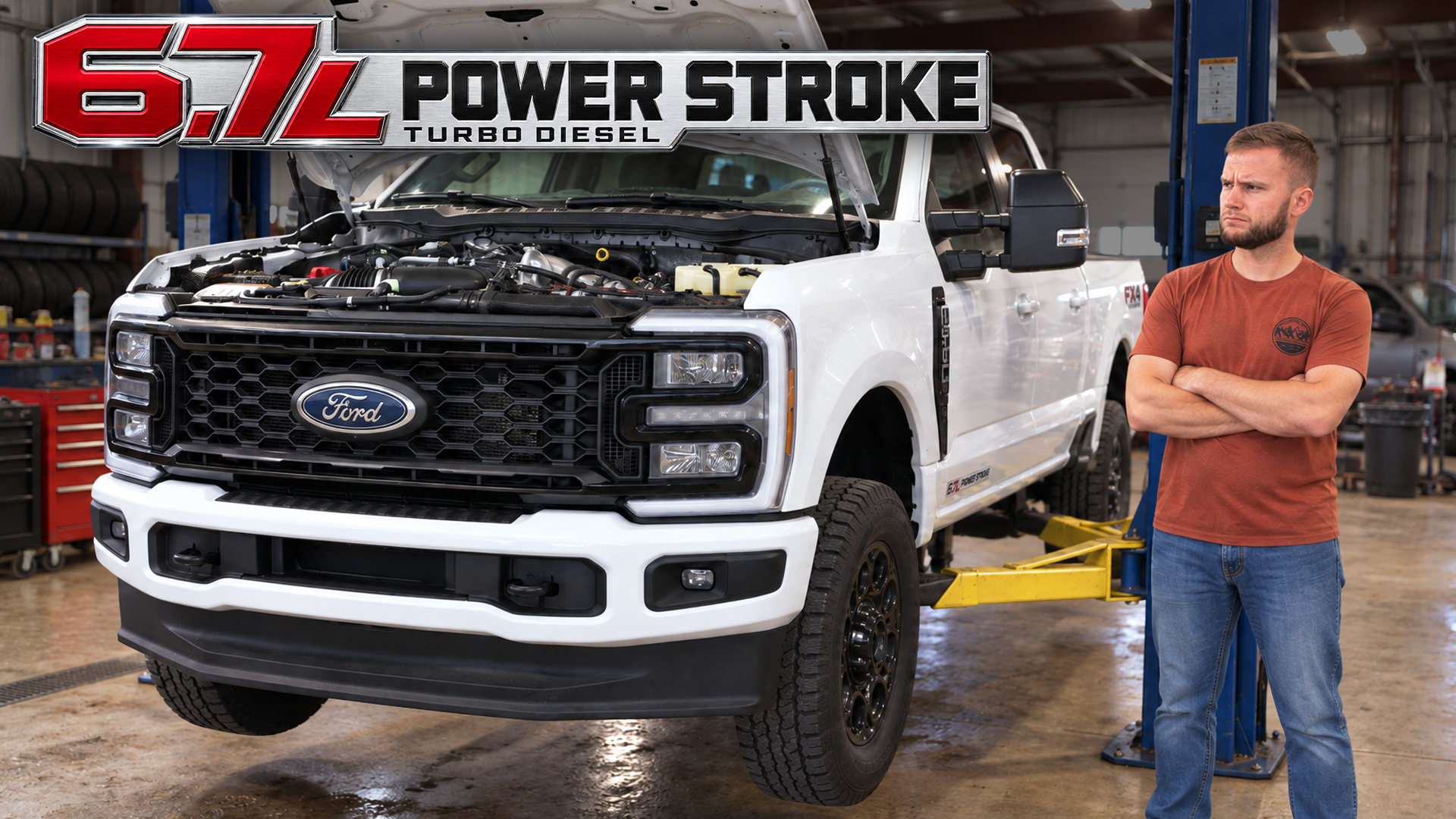
5 Things I Hate About the 6.7 Power Stroke Diesel (And Why I Would Still Buy One)
If you have spent any time around heavy-duty trucks lately, you know the Ford 6.7 Power Stroke high-output diesel is an absolute powerhouse. It lays down more horsepower and torque than any other diesel engine on the market right now. But no engine is without flaws. Today, we are breaking down five things that cause real headaches for owners, along with the honest reasons why these flaws still wouldn't stop me from putting one in my own driveway.
Whether you are hauling heavy equipment across Lancaster County, heading up into the mountains of central Pennsylvania, or driving in from Philadelphia, Reading, Harrisburg, or northern Maryland, having the full picture before you buy is everything.
1. The Notorious Bosch CP4 Fuel Pump
Ford has continued to run the Bosch CP4.2 high-pressure fuel pump right on through modern production years, even while competitors like GM moved away from it back in 2017 in favor of Denso pumps.
Why It Causes Problems
The CP4 spins diesel fuel up to a massive 30,000 PSI. That design originated for European diesel, which has higher lubricity than the drier ultra-low sulfur diesel fuel we pump here in the United States. When a CP4 runs dry without enough lubrication, you get metal-on-metal friction. When the pump gives out, it can shred internally and send microscopic metal contamination straight through the fuel rails, injectors, fuel lines, and back into the fuel tank. Cleaning up that mess is easily a $10,000 to $15,000 repair job. Ford sticks with it primarily due to emissions compliance and production scale savings, as the high-pressure system atomizes fuel exceptionally clean.
Why I Would Still Buy It
First off, that extreme fuel pressure is what helps unlock an incredible 500 horsepower and 1,200 pound-feet of torque. Second, pump failures rarely happen right out of the gate; you normally see them between 50,000 and 150,000 miles, averaging around the 100,000-mile mark. If you buy a newer truck or carry solid warranty coverage, you are protected. Once you exit factory warranty, installing an aftermarket disaster prevention kit costs just a few hundred bucks. For a truck that costs anywhere from $50,000 to $100,000, adding a low-cost kit to protect the system is simple peace of mind.
2. The First-Gen DualBoost Turbo Trap (2011 to 2014)
If you are hunting for an older, budget-friendly Super Duty rather than dropping modern heavy-duty money, there is a design quirk you need to watch out for on early models.
Early Compressor and Bearing Troubles
On the 2011 to 2014 models, Ford introduced a bizarre setup called the DualBoost turbo. It featured two back-to-back compressor wheels mounted on a single shaft inside a single housing. On paper, it was meant to spool quick and give snappy throttle response. In reality, the ceramic bearings inside were prone to screeching, smoking, and outright mechanical failure under load. Ford quietly retired that design in 2015 and switched to a standard single variable geometry turbo that proved far more reliable.
Why I Would Still Buy It
The simple reality is that you do not have to worry about this on late-model trucks. We focus on modern, late-model diesel trucks that have the updated variable geometry turbo setup already built in. If you are browsing used private party listings for an early generation 6.7, just keep that turbo upgrade cost in mind before pulling the trigger.
3. Dual Independent Cooling Systems
Pop the hood on a modern 6.7 Power Stroke and you will find an intricate maze of piping, reservoirs, wiring, and hoses.
Double the Maintenance Complexity
Ford split the thermal management into two completely independent cooling loops:
-
A primary engine cooling loop that handles basic block temperature.
-
A secondary low-temperature loop that circulates coolant through the charge air cooler, fuel cooler, transmission cooler, and sections of the exhaust gas recirculation system.
More coolant, extra water pumps, and double the hose connections naturally raise the odds of developing leaks. The EGR cooler on these platforms is also known to clog, crack, or cause gradual coolant loss over time.
Why I Would Still Buy It
As much as mechanics grumble about working in tight spaces under the hood, this cooling setup is the reason you can pull a 30,000-pound trailer up steep Appalachian grades in the middle of summer without watching your temperature gauges spike. The cooling performance under severe load is simply unmatched.
4. Plastic Cold-Side Charge Pipes and Fragile Glow Plugs
Small factory components that fail unexpectedly can turn a smooth workday into an unexpected tow bill.
Brittle Construction Under Heat and Pressure
The cold-side charge pipe on these engines comes from the factory in molded plastic. Under heavy boost pressure and continuous heat cycles, that plastic pipe can split, crack, or completely blow off the intercooler coupling. When it pops off, you lose turbo boost instantly and end up stranded on the shoulder.
Early 2011 trucks also suffered from fragile glow plugs where the tip could snap off and drop right into the combustion cylinder, causing catastrophic internal engine damage. Ford resolved the glow plug design years ago, but the plastic charge pipe lingered.
Why I Would Still Buy It
A plastic charge pipe is one of the easiest and cheapest fixes in the aftermarket diesel world. You can swap that plastic tube for a durable aftermarket metal pipe for around $50 in your own garage. It looks like a big problem when the boost drops out, but the remedy is straightforward and inexpensive.
5. Oil Dilution from Short-Trip Driving
If you treat a modern heavy-duty diesel like a grocery getter, your engine will let you know in short order.
How the DPF Regeneration Cycle Impacts Your Oil
To clean out the diesel particulate filter, the engine management system injects raw diesel fuel on the exhaust stroke to raise exhaust temperatures and incinerate trapped soot. During that regeneration cycle, unburnt diesel fuel can slip past the piston rings and work its way directly into the engine oil crankcase.
Ford accounted for this by giving the engine a massive 13-quart oil capacity so a bit of fuel dilution does not instantly wash out your bearings, but repeated short-trip cycles that cut regeneration off mid-stride will steadily thin your oil and stress the emissions components.
Why I Would Still Buy It
Every modern emissions-equipped diesel from Ford, GM, and Ram operates with similar regen requirements. The solution is straightforward: these trucks are workhorses designed to run hot, haul cargo, and stay out on the highway. Giving your Super Duty regular 20 to 30-minute drives at operating temp lets the system complete its cleaning cycle naturally. If you run your truck the way it was built to run, it stays clean and runs strong.
Finding the Right Heavy-Duty Truck in Ephrata, PA
At Mark Martin Motors, located at 4126 Oregon Pike in Ephrata, Pennsylvania, our goal is to make sure every customer drives away with the full picture on capability, maintenance, and long-term reliability. We regularly work with truck buyers coming from across Lancaster, Lebanon, Berks, Chester, and York counties, as well as drivers traveling in from the surrounding Mid-Atlantic region.
If you are weighing your options between a Ford Super Duty, Duramax, or Cummins, stop by our lot on Oregon Pike or check out our full video breakdown below.
https://www.youtube.com/watch?v=xx8-AzqWpLg