
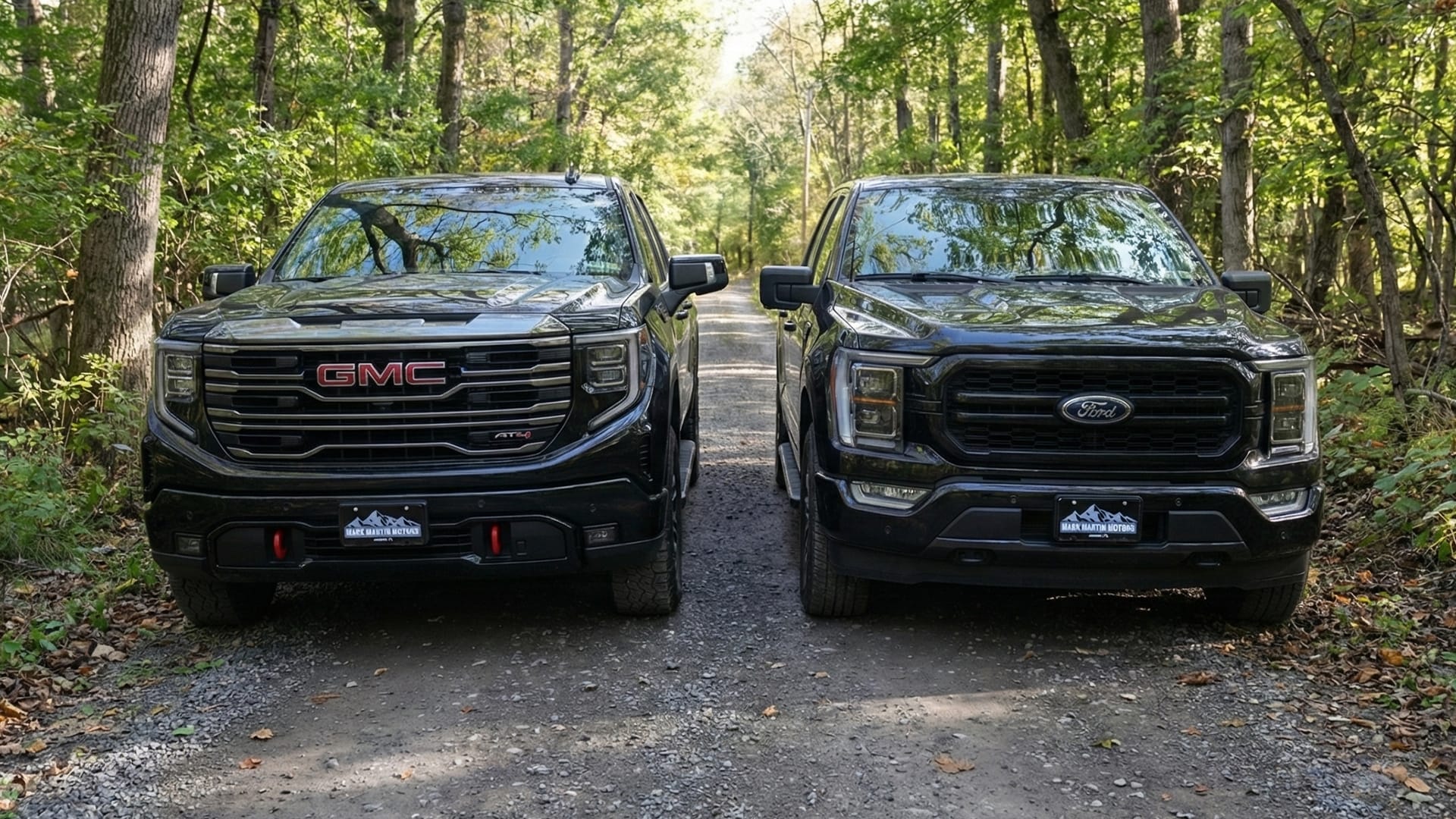
When shopping for a 2025 half-ton pickup, the engine choices have never been more advanced—or more confusing. Two of the hottest contenders on the lot right now are the 2025 Ford F-150 PowerBoost Hybrid and the 2025 GM 3.0L Duramax Diesel.
As a truck dealer who sells countless units of both, I’ve moved beyond the factory brochures to look at the real-world feedback, long-term reliability, and driving characteristics of these two powerhouses. Whether you are looking for raw torque, towing capability, or fuel efficiency, here is the honest truth about the PowerBoost vs. the "Baby Duramax."
The 2025 Ford F-150 PowerBoost: The High-Tech Hybrid
The PowerBoost is Ford’s answer to the hybrid question. It’s not a plug-in; it regenerates its battery through braking and driving. It is a technological marvel, but it comes with a specific set of pros and cons.
The Pros: Horsepower and On-Board Power
-
Best-in-Class Power: The PowerBoost is a monster, putting out 430 horsepower and 570 lb-ft of torque. Even the 6.2L V8s can’t compete with these numbers.
-
Fuel Economy: You can expect an average of 23 MPG, which is a significant jump over the standard 3.5L EcoBoost’s 19 MPG.
-
The Generator: One of the biggest selling points is the bed generator options. You can spec this up to 7.2kW, enough to run a camper, a pellet smoker, or even your house during an outage.
-
Warranty: Ford offers an 8-year/100,000-mile warranty on the hybrid battery components.
The Cons: Towing and Reliability
-
Reduced Towing Capacity: Because the truck is heavier due to the batteries, the max towing is capped at 11,200 lbs (compared to 13,500 lbs on a standard EcoBoost).
-
Driving Feel: The transition between electric mode and the gas engine can feel "clunky" and noticeable, especially in stop-and-go traffic.
-
Reliability Concerns: Consumer Reports has given the PowerBoost engine a reliability rating of just 7 out of 100.
-
Battery Maintenance: To keep the battery healthy, this truck needs longer trips. Short runs to the grocery store won't fully charge the system, potentially leading to issues. Plus, replacing that battery post-warranty could cost upwards of $10,000.
The 2025 GM 3.0L Duramax: The Efficiency King
The "Baby Duramax" has been a fan favorite since 2020. For 2025, it remains a strong competitor, specifically for those who drive long distances.
The Pros: MPG and Towing
-
Incredible Fuel Economy: This is the clear winner at the pump. Rated at 26 MPG combined, many owners report hitting 30 MPG on the highway.
-
Superior Towing: With a max tow rating of 13,200 lbs, it pulls 2,000 lbs more than the PowerBoost.
-
Diesel Exhaust Brake: A huge win for towing, this feature (similar to a Jake brake) helps slow the truck down using the engine, saving your brakes on steep grades.
-
Smooth Ride: The engine and transmission combination is incredibly smooth—arguably one of the best driving experiences in the segment.
The Cons: Emissions and Maintenance
-
The "Short Trip" Problem: Like the hybrid, diesels hate short trips. The truck needs to get hot enough to perform a DPF regeneration to burn off soot. If you only drive 5 minutes a day, you will have emission system headaches.
-
Horsepower: At 305 HP (and 495 lb-ft of torque), it is significantly lower in horsepower than the Ford.
-
Known Issues: While GM updates the engine frequently, 2025 models have a service bulletin regarding crankshaft end play (listen for a knocking sound). However, the warranty covers the diesel engine for 5 years/100,000 miles.
The Verdict: Which Truck Should You Buy?
Both trucks have a similar "Achilles heel": Short trips. Neither the PowerBoost nor the Duramax is designed for a driver who only drives 2 miles a day. They both need to stretch their legs to keep their systems (Battery vs. Emissions) healthy.
Choose the Ford F-150 PowerBoost if: You want maximum acceleration, the onboard generator utility, and you lease or trade in your vehicles before the warranty expires.
Choose the GM 3.0L Duramax if: You tow heavy loads, drive high mileage annually, want the best possible fuel economy, and plan on keeping the truck for the long haul (200,000+ miles) without worrying about a hybrid battery replacement.
Watch the Full Breakdown
Want to see these trucks side-by-side and hear more about the specific reliability ratings? Check out the full video below:
https://www.youtube.com/watch?v=nVfpeXNU9Xw