
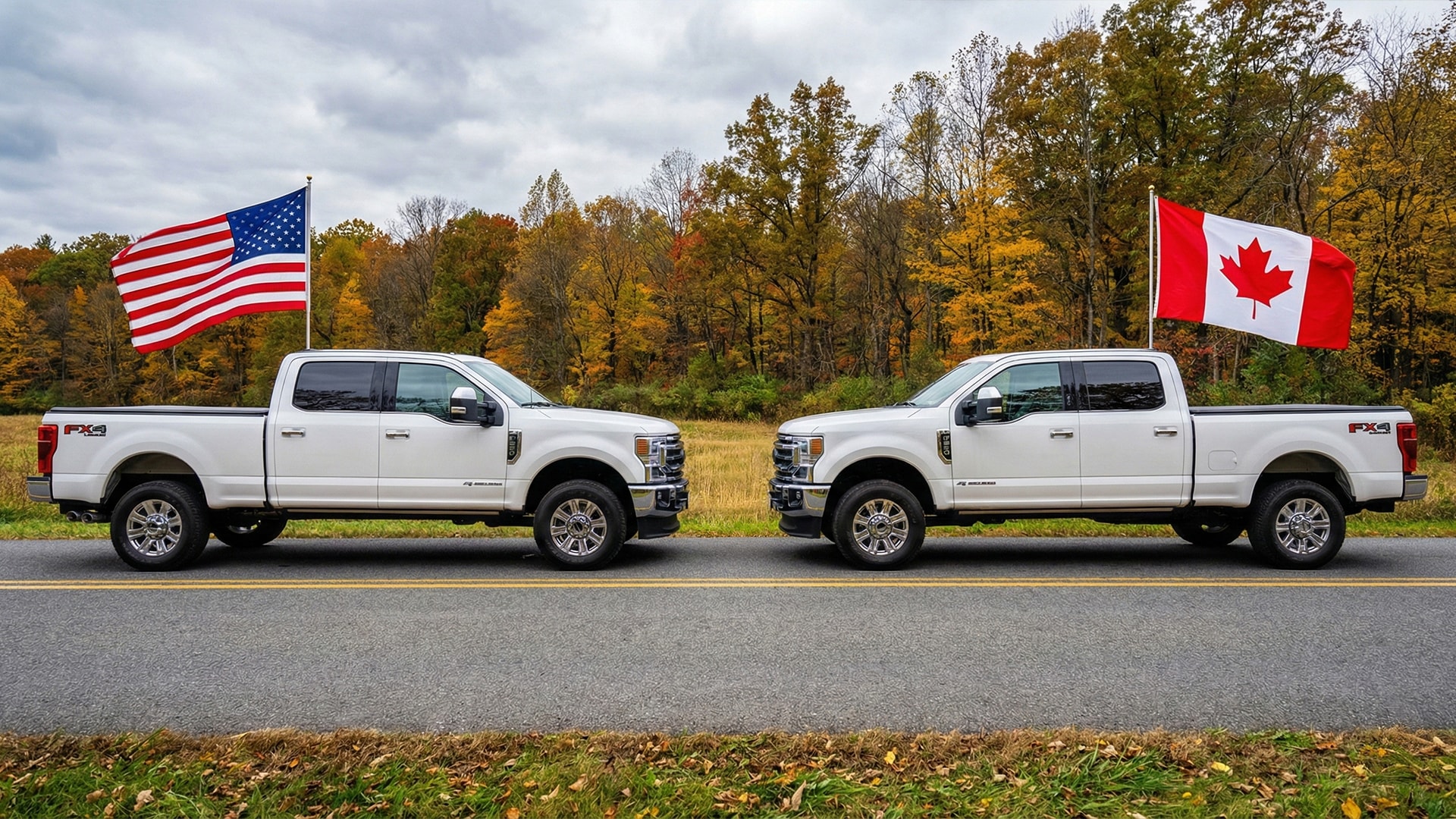
If you have been shopping for a used pickup truck recently, especially here in the Northeast or specifically around Lancaster, Pennsylvania, you have likely noticed a trend. A significant portion of the used truck inventory on the market originally comes from Canada.
This often leads to a common question we hear at the dealership: "Are Canadian trucks bad?"
There is a stigma surrounding these so-called "gray market" vehicles. Customers worry about warranties, rust, and odometer issues. Today, we are going to get into the weeds and debunk the myths surrounding Canadian imports so you can make an informed buying decision.
What Exactly is a "Canadian" Truck?
First, we need to clarify what these vehicles actually are. When we say a truck is "Canadian," it simply means it was sold new in Canada.
However, almost all of these trucks—specifically the domestic ones like GMC, Chevy, and Ford—were built in the United States. They are manufactured in the same US factories as the trucks sold in Pennsylvania or Florida. Due to strict tariffs (up to 25%), dealers are generally not importing trucks built outside of the US.
The bottom line: Mechanically and structurally, a Canadian truck is identical to a US truck.
The Real Differences: What You Need to Know
While the chassis and engine are the same, there are a few minor differences to look for:
-
The VIN Sticker: You will see a Canadian Maple Leaf on the door jamb sticker.
-
Language: Some warning labels may be in French if the vehicle was sold in a French-speaking province.
-
Daytime Running Lights (DRL): This is the biggest functional difference. Canadian safety laws require daytime running lights to be on at all times. You cannot turn them off manually.
-
Block Heaters: This is a major perk. Almost all trucks sold new in Canada come standard with an engine block heater. In the US, this is often an option you have to pay extra for.
-
The Speedometer: Years ago, dealers had to physically swap the gauge cluster to change Kilometers to Miles, which led to fears of odometer rollback. Today, modern trucks have digital clusters. During the import process, a simple software switch changes the readout from Km to Miles. It is seamless and accurate.
Myth Busted: "Canadian Trucks are Rust Buckets"
The most common objection we hear is, "I don't want a truck from Canada; it’s going to be rusted out."
This is largely a myth for two reasons:
-
Geography: Canada is massive. A truck from British Columbia comes from a climate very similar to Northern California. Furthermore, in the far north, it gets so cold that road salt isn't effective, so they use sand, which doesn't cause corrosion.
-
Vehicle Age: Most Canadian imports are only 1 or 2 years old. They haven't been on the road long enough to develop significant rust issues.
In many cases, a truck from Canada is in better condition than a truck driven for five years in New York or Michigan.
Will the Warranty Transfer?
This is the most critical question for buyers. The answer depends on the manufacturer:
-
Ford, GM, and BMW: These companies view the market as "North America." Their warranties are fully transferable. If you buy a GMC Sierra from Canada, your local US dealer will honor the warranty.
-
Mercedes-Benz: They generally do not honor the warranty on vehicles imported from Canada.
-
Stellantis (Ram, Jeep, Dodge): This has been tricky. Historically, they did not honor the warranty in the US (you had to drive back across the border for service). However, as of late 2024, reports indicate that Stellantis is beginning to honor warranties on 2024 model year vehicles and newer. Always verify this with your dealer before buying.
Why Are There So Many Canadian Trucks in the US?
It comes down to simple economics. Currently, the US Dollar is much stronger than the Canadian Dollar.
In Canada, manufacturer incentives often make it cheaper for a Canadian citizen to buy a brand new truck than to keep a used one. This creates a surplus of lightly used trucks in Canada. US dealers can buy these trucks, import them, pay the tariffs, and still offer them at a competitive price because of the exchange rate.
Summary
If you are looking for a used pickup, don't let the "Canadian" label scare you. These are US-built trucks that often come with bonus features like block heaters and are available at excellent price points. As long as the dealer has handled the import process correctly and provides a clean US title, these trucks are some of the best values on the lot.
Watch the full deep dive on this topic in the video below: