
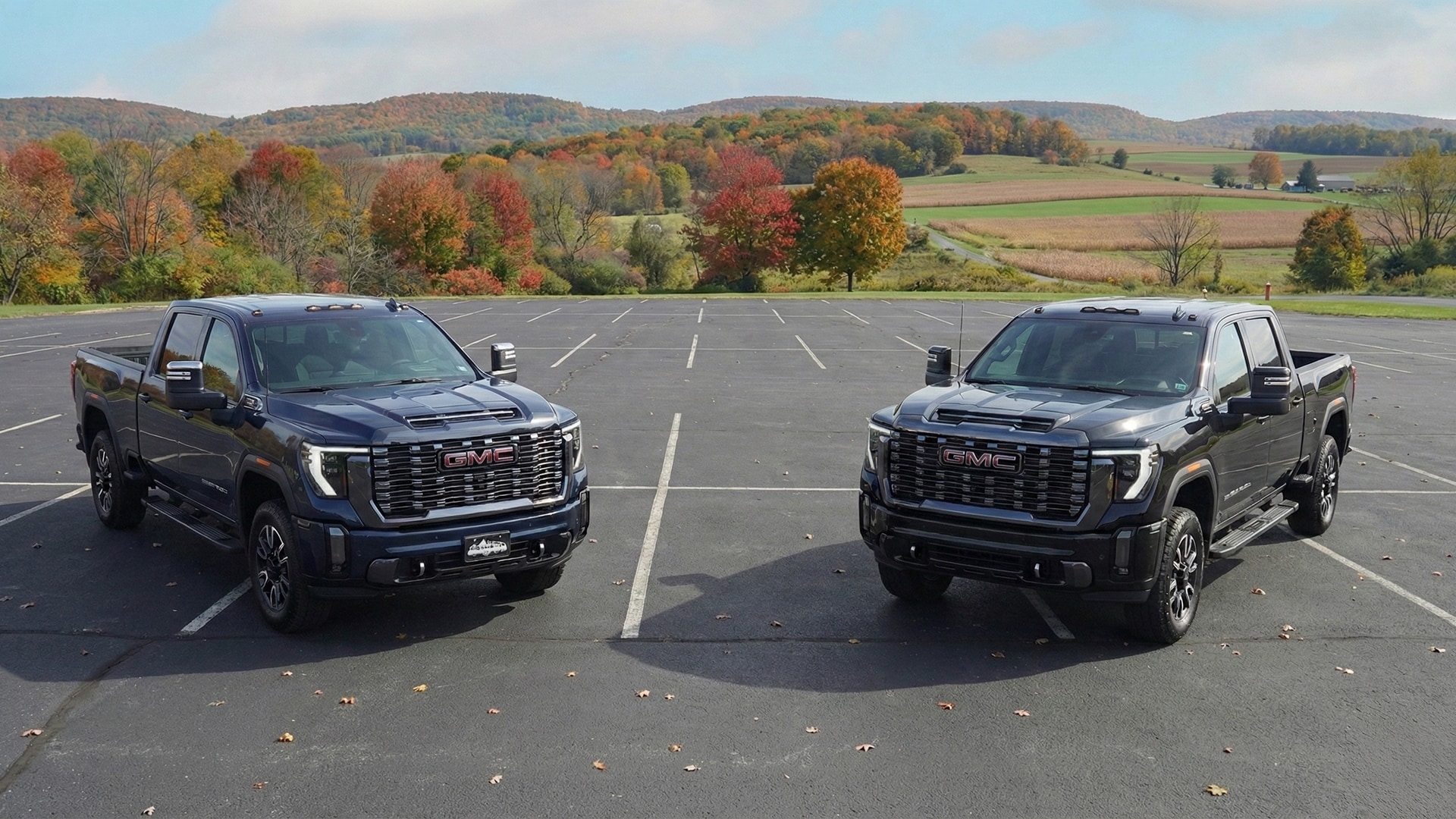
When you’re looking at heavy-duty trucks, specifically the top-tier 2024 GMC Sierra Denali Ultimate, it can be incredibly difficult to tell the difference between a 2500 HD and a 3500 HD just by looking at them.
There is a ton of conflicting information out there regarding weights, specs, and capabilities. Are the brakes better on the one-ton? Does the 3500 have a bigger engine?
We have both trucks side-by-side to break down exactly what is the same, what is different mechanically, and most importantly, why those differences matter for your safety and legal liability when towing.
What Is The Same? (More Than You Think)
Visually, if you walk up to these two 2024 Denali Ultimates, the only dead giveaway is the badge on the door indicating "2500" or "3500."
Because these are both the top-of-the-line Denali Ultimate trim, they share almost every cosmetic and luxury amenity, including paint-matched bumpers, power running boards, and the standard 20-inch wheels wrapped in Goodyear Wrangler tires (275/65R20).
However, the most surprising similarities are under the hood and in the stopping power:
-
Engine & Drivetrain: Both trucks use the exact same Duramax diesel engine and Allison transmission pairing. Horsepower (470 hp) and torque (975 lb-ft) are identical.
-
Braking: A common myth is that the 3500 has bigger brakes. It does not. The braking system and the diesel exhaust brake feature are identical on both trucks.
-
Towing Prep: Both feature the same heavy-duty hitch insert and trailering wiring, with optional fifth-wheel/gooseneck prep packages available on both.
The Mechanical Differences: 2500 vs. 3500
If the engine and brakes are the same, where do the differences lie? It gets granular, but these details define the truck's official capabilities.
1. Suspension and Stance
The most noticeable visual difference side-by-side is height. The 3500 sits about an inch higher than the standard 2500 due to beefier front springs.
In the rear, a standard 2500 uses a five-leaf spring setup. The 3500 uses a seven-leaf setup (five main springs plus two overload "helper" springs that engage when weighted down).
2. The Rear Axle
The standard 2500 utilizes an 11.5-inch gear axle, which is torque-limited in first gear to protect the driveline. The 3500 upgrades to a 12-inch gear axle, which is not torque-limited in first gear, allowing for immediate maximum pulling power.
3. Chassis Reinforcements
The 3500 frame receives different gussets, sturdier spring mounts, and an extra front suspension crossmember to handle heavier loads over time.
The "Max Tow Package" Wildcard
Here is where it gets confusing for 2024 buyers. GM now offers an optional "Max Tow Package" for the 2500.
If you equip a 2500 with the Max Tow Package, you are essentially getting all the hardware of the 3500 single-rear-wheel truck. You get the 7-leaf rear suspension, the 12-inch non-torque-limited rear axle, the extra chassis reinforcements, and the taller stance.
Mechanically, a 2500 Max Tow and a 3500 SRW are nearly identical. The difference comes down to the legal sticker on the door jamb.
The Numbers Game: Towing and Payload Compared
The biggest difference between these trucks isn't necessarily what they can physically pull, but what they are rated to pull for licensing, registration, and insurance purposes.
These numbers are specific to the 2024 Diesel Denali Ultimate trim (luxury amenities add weight, lowering payload compared to a work truck).
Note: The 3500 SRW and the 2500 Max Tow share the same 20,000 lb conventional tow rating. The 3500 gains its advantage in Payload and 5th Wheel capabilities due to its higher legal Gross Vehicle Weight Rating (GVWR).
Why These Differences Matter
If a 2500 Max Tow has the same suspension as a 3500, why buy the 3500?
It comes down to safety from a liability perspective. The GVWR dictates the maximum legal weight of the truck and everything in it or attached to it (including tongue weight).
If you are towing a massive fifth-wheel camper and you exceed the payload sticker on a 2500, even if the truck feels fine pulling it, you are legally overweight. If you get into an accident, insurance companies and law enforcement will look at those stickers. Being overweight can lead to massive lawsuits and denied insurance claims.
You buy the 3500 not just for the extra leaf springs, but for the legal capacity printed on the door sticker that ensures you are operating within the manufacturer's safe limits.
To see a complete walkaround of these two beautiful trucks and see the spec stickers up close, watch the full video review below: https://www.youtube.com/watch?v=EWcsu9PVcbk